URGENT: Youth leadership needed to save our girls

How is this a leadership issue? In Nova Scotia, 17-year-old Rehtaeh Parsons took her own life after photographs of her being raped at a party at the age of 15 were taken and then circulated on social media for over 18 months. In a similar case in California, 15-year old Audrey Pott hanged herself after she was sexually assaulted while passed out at a party seven months ago, and after humiliating pictures were posted online.

Rape, suicide and cyber-bullying are leadership issues because, at so many points in time, a little bit of courage and leadership could have saved these lives. It would have taken:

  • One person to call 911 during the assault at a party
  • One person to stop the sexual assault
  • Many people to refuse to forward evidence of a crime and pornography
  • One person to report it to police or a school resource officer
  • People to reach out to support these girls after they had been victimized (and, perhaps many did)

In the aftermath, people are lobbying politicians to enact stronger cyber-bullying legislation; but leadership from police, judges and politicians comes too late for these girls. It can only penalize future actions of a similar kind – not prevent them.

I’m also advocating leadership of a different kind. Let’s empower young people to stand up for one another. I’m talking about daily acts of self-leadership to do what’s right and to lead within their sphere of influence. Every day teenagers “don’t let friends drink and drive.” Let’s empower them to put a stop to sexual violence. Let’s denounce the aggressors so we don’t have to hear that these girls – the victims – were ashamed when that’s clearly not where the shame should lie.

Let’s also remember that leadership is about tenacity. Please ensure we’re not distracted by the latest issue on the news and forget that almost daily we are reading about violence against women in our communities. If taking advantage of young girls at parties is a cultural norm, then I am concerned for my daughter, and my neighbours’ daughters. Please support the local organizations that work tirelessly to prevent violence against women and who are there to help women, families, employers and communities pick up the pieces in the aftermath.

On a daily basis we see examples where it would be more effective, more cost efficient and more empowering to trust. This HBR blog post is a great example of a manager who didn’t trust his co-worker, didn’t trust a culture and everyone ended up paying the price. Where do you see examples of this in your daily work and what could you do to change it…. even just a little?

Sometimes I’m happy I took the trip to Abilene

Are you familiar with the Abilene Paradox? It’s the anecdote told by George Washington University Professor Jerry B. Harvey in his article: The Abilene Paradox: The Management of Agreement, originally published in 1974. Often used to define group think, it recounts the story of a Texas family that takes a long, hot, drive in a car without air conditioning to eat dinner in a town no one wanted to visit because everyone was reticent to express their concerns and preferences. Usually, the Abilene Paradox is used to encourage people to express dissent in organisations to raise concerns rather than “go with the flow.”

Mack Eplen's Restaurant, Abilene, Texas; Abilene Paradox
Source: Boston Public Library’s Flickr Photostream

I had an “Abilene moment” a few weeks ago but I’m glad I took the trip. Late on Saturday morning, my husband suggested we call friends to invite them over that evening. I’d been working a lot of overtime and neglecting friends and family; so, while I was looking forward to a quiet evening at home, I thought he was looking forward to a social occasion. I said “great idea” and left the message.

The day filled with family activities, chores (including the deceivingly tiring cleaning out of toy boxes and bookshelves) and errands. So  when our friends didn’t call back by dinner time, I was secretly relieved and already thinking about my fuzzy slippers. Then, they phoned from another town at 6:30 to say they could come in an hour. Despite my husband’s now furrowed brow and my getting-cranky kids, I brightly and a little falsely said “sure!” because what was a good idea in the morning should still be a good idea in the evening, right? I also didn’t want to back-out if our friends were looking forward to it.

When they arrived at 8:00 pm it was already my daughter’s bed-time. With the drinks barely poured, our friends divulged that they had spent all day shopping at the huge, self-serve, big-box furniture store and were pretty tired.

I was pretty sure we were in Abilene!

Then something wonderful happened. We played a game. Shared a snack and some stories. I put my daughter to bed a tad later so she could enjoy the visit and still be a reasonable human being the next day. Then, promptly at ten, our friends jumped up and said they had to pick up their thirteen-year-old who had refused the trip to Abilene and opted for a visit with his friend. Their visit was short, long overdue and vastly superior to tv and fuzzy slippers.

Sometimes, it’s worth the trip to Abilene. It becomes the stuff of family lore or a surprising change from the routine. You don’t want to be a doormat or to go against your values or best judgement, but sometimes it’s okay to go with the flow and be open to the possibilities. You might have fun. You might learn something new.

Have you ever been to Abilene? What happened while you were there? Send me a post card!

P.S. If you’re looking for a fascinating little escape, visit the Boston Public Library’s Flickr Stream.

How I fell off “The First 90 Days” wagon

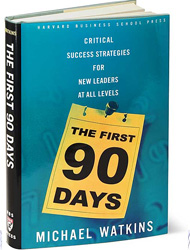
management transition planningBefore starting my new job, I read (most of) The First 90 Days by Michael Watkins. I had the best intentions. I had a newly minted M.A. in Leadership in my back-pocket for crying out loud.

So what happened to my plan?

It’s possible that I underestimated the challenge of managing a new type of department, in a very complex economic sector that is new to me, in a new organization and in the public sector for the first time.

It’s also possible that the book overpromises a tad. For example, I’m not sure that in three months you can understand an organizations’ “markets, products, technologies, systems, and structures, as well as its culture and politics” (p.12). Of course that’s in addition to diagnosing the situation in which you find yourself, securing early wins, negotiating success with your boss, building and realigning your team; creating coalitions and, of course, keeping your personal balance and expediting everyone around you. Is it just me or is this a bit of a tall order? Recommendations in the first chapter alone would take over a month of solid meetings.

During my first few days, I kept forgetting to use my tag in the elevators!

Nonetheless, here I am combing through my copy and thinking about a more systematic approach to my new role. Don’t get me wrong. I’ve done my research: read plans; customer satisfaction results; engagement surveys; monthly, interim and annual reports. I’ve met with key people in my department and in a few others; jumped into projects; conducted hiring interviews; listened in on call centre interactions; attended training on key products and met with external clients. Am I fully “accelerated”? Sadly, no. It’s time to shore up my efforts and try again. Here’s my new plan for The Next 90 Days:

The Learning Agenda

  1. Revitalize my internal networking efforts to better understand internal processes and to build alliances.
  2. Start networking with external contacts. Earlier efforts derailed but the benefits are obvious and the opportunity is there.
  3. Discuss with my team the biggest organizational/departmental challenges and their causes; the most promising opportunities for unexploited growth; what would need to happen to exploit these opportunities and where I should focus my attention.

Securing Early Wins

  1. Understand what will be considered a win and identify  few quick ones.
  2. Find a systematic way to focus. (Admittedly, there has been too little focus.)
  3. Write down what I want people to say I have accomplished after one, two and five years and pursue those objectives relentlessly.

Keep (or find) My Balance

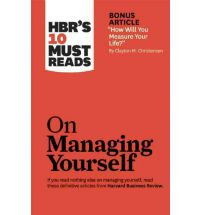
On Managing YourselfOne thing that The First 90 Days does not cover effectively, in my opinion, is any element of self care beyond “stabilize the home front.” That sounds a little operational to me. Maybe it’s just in my home but my husband and children don’t really enjoy being “managed”. To find my balance, I’ll need a healthy dose of  Tony Schwartz and Catherine McCarthy’s Harvard Business Review article: Manage Your Energy, Not your Time. This piece provides proven techniques to renew four dimensions of personal energy.

1. Physical Energy: Set an earlier bedtime. Get more exercise. Eat small meals and light snacks every three hours. Take brief but regular breaks.

2. Emotional Energy: Diffuse negative emotions with deep abdominal breathing. Examine your situation through a different lens (the other’s perspective or a longer term view).

My favourite: “Fuel positive emotions in yourself and others by regularly expressing appreciation to other s in in detailed, specific terms through notes, emails, calls or conversations (p.64).”

3. Mental Energy: Reduce interruptions by performing high value tasks away from phones and email. Respond to voice-mail and email at designated times. Each night, identify the most important task for the next day and make it your first priority in the morning.

4. Spiritual Energy: Find ways to do more fulfilling activities. Allocate time and energy to what’s most important. Live your core values.

That’s my plan for the next 90 days. What has worked for you during times of transition?