Secrets from my MA Leadership

That’s me with President Alastair Summerlee and Peter Senge on the left.

For the first time in two years I am enjoying holidays without having to lug textbooks and all that brain-baggage of “I should be working on a paper”. It’s delightful! It’s amazing to think back on classmates & teachers, assignments and readings and to consider everything I learned and accomplished in that time.

Don’t have time for 20+ hours a week for two years to complete an MA in Leadership? Thinking about it but not sure what it will cover?

Here’s a shortcut from the archives – all the secrets of my MA Leadership.

Not in the mood for a read? I delivered an expanded version of the recap on behalf of my class – now available on video! (Sorry, I’m a little punchy from the heat)

Since we’re never done learning, I’d like to know where did you learn about leadership? Where do you go to learn more?


Five Ways Leadership is Like Riding a Bike

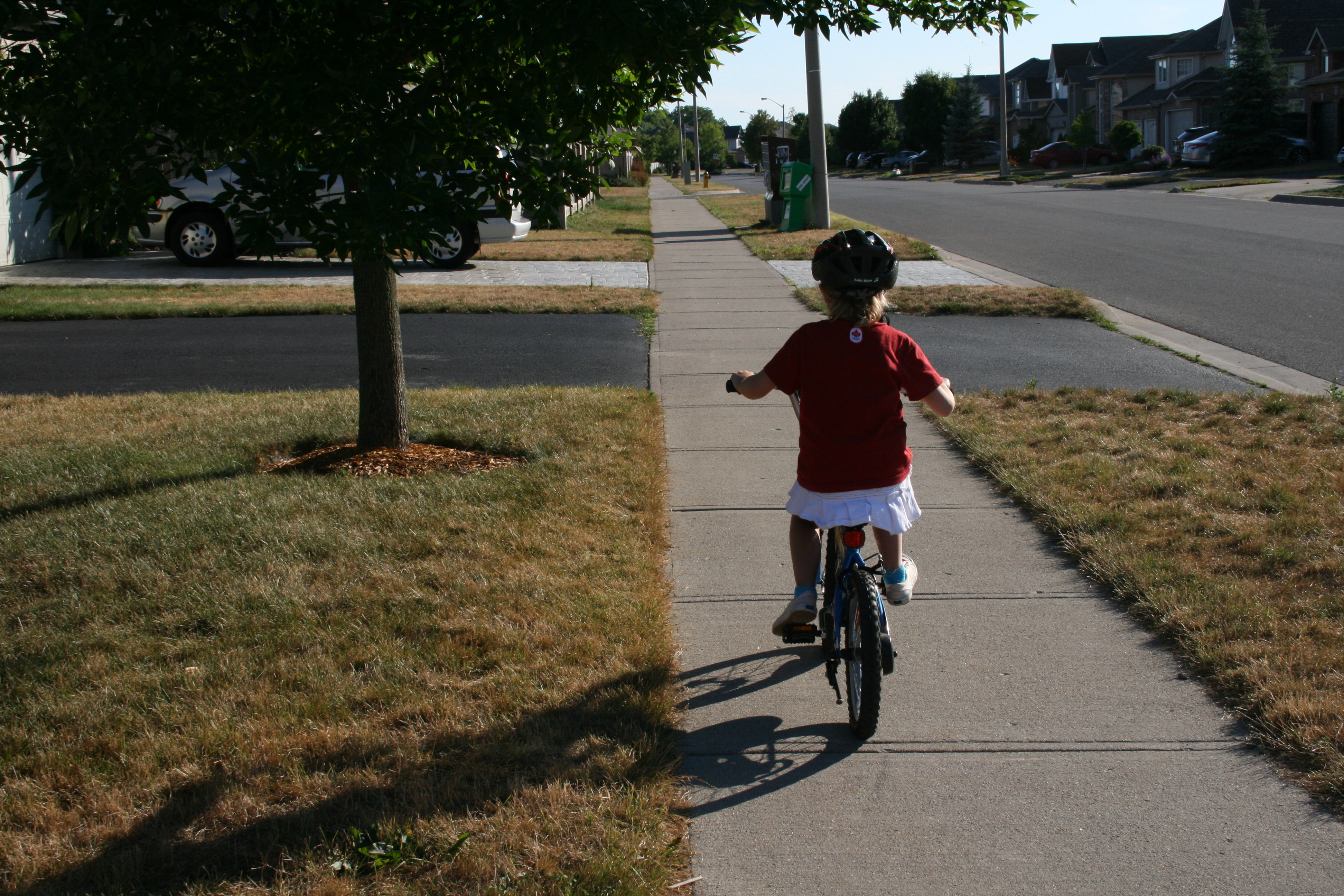
My five/almost 6-year old daughter is mastering riding a two wheeler at the moment. Today she said: “You have to look where you’re going because then your hands go there and your whole body.” Wise words that got me thinking about other bike riding and life “basics”.

  1.    Vision, Balance, Momentum

    Look where you’re going. Basic vision sets your destination and lets you identify potential pitfalls. It’s not only knowing the general destination but also the immediate next steps you need to take to stay on track.

  2. Balance. That’s the whole trick of riding a bike isn’t it? As for life and leadership, let me know if you have mastered it. Sometimes I still teeter but I try not to overcorrect.
  3. Keep pedaling! Momentum helps to keep that balance and it’s the only way to get to your destination. Plus, the more you do it the easier it gets so “Go darling, go!”. Perseverance pays off.
  4. Signal your intentions. Sweetheart, please stop braking suddenly in front of Mom! The lesson here: If you’re in the lead, announce your intentions to avoid a chain-reaction collision behind you. The environment has enough surprises, try to minimize them for your followers.
  5. Scan your environment. Just like vision, you have to watch for potholes, cars backing out of driveways, dogs, etc. In addition to staying safe, knowing your environment lets you find cool trails and new adventures.

So, my sweet girl whether you are learning to ride your bike or leading in the future. Have a great ride!

What do Conversations, Cottages & Swimming have to do with leadership?

Are you celebrating Canada Day/Fourth of July with an extended vacation week? Me too. So I’ve revived 3 summer themed blog posts that you may have missed but that could serve you well.

First, Put down the “smart phone” and ask a great question may convince you that “So, how are things?”  or “Would you please pass the ketchup?” are not the most powerful conversation starters and provides easy tips for better discussions.

Why not resolve to have even one deeper conversation around the BBQ or the campfire this month? You’ll be hooked.

Second, Leadership Lessons from the Cottage was one of my first blog posts and one of the most popular. Do you think about stuff like this when you’re kicking back in the hammock? I’d like to know.

Finally, dive into 8 Leadership Lessons from Masters Swimming – you don’t have to be Andrew Ford or Michael Phelps to appreciate this -just someone who has tried something new and learned from the experience. Who knows, it may inspire you to work on your freestyle and impress your friends and family at your next poolside or lakeside gathering.

I don’t care what the bloggosphere says (oh I’m such a rebel), everyone needs downtime to come up with fresh ideas, to connect with nature and family, so that’s what I’m doing this week. I  hope you have an opportunity to do the same and please let me know if you’ve used any of the tips and how that worked out for you 🙂

See you in a few weeks when I wrap up the Twelve Weeks to Trust series 🙂

9 Ways to Mitigate the Downsides of Over-Trust

It’s only responsible for leaders to understand both the benefits and the downsides of trust in a business context. Only then can they put in place measures to mitigate the potential for opportunism.

Gleaned from my research in marketing, economics, business strategy and ethics literature, here are 9 ways you can mitigate the downsides of over-trust.

  1. Thoroughly assess the trustworthiness of the new partner [individual or organization] to avoid cross-domain errors. Seems obvious but think about Bernie Madoff!
  2. Be aware of the tendency to routinize trust decisions (Goel et al., 2005). Systematize the inclusion of critical and constructive thinking in your business relationships.
  3. Institutionalize routines that create checks and balances.
  4. Expand the number of people involved in the relationship.
  5. Encourage functional conflict to stimulate innovation and joint-problem solving and create a culture where people feel free to raise concerns in a constructive way (Morgan & Hunt, 1994). This avoids a tendency to make relationships ‘frictionless’ and to tend towards group think.
  6. Address untrustworthy behaviour immediately and decisively.

Fichman (2003) writes  “It would be adaptive for those who are trusting to have (1) effective strategies for dealing with exploitation in the population, (2) a reputation for in-kind responsiveness to others’ actions, and (3) the ability to detect potential defectors” (Fichman, 2003, p. 140).

7.  Rotate boundary spanners to deter excessive insularity (Fang et al., 2008, p.94)

8.  Involve an external third party to terminate a relationship (Ring and Van de Ven, 1994)

9.  Implement formal and informal governance mechanisms to reduce the risk of misplaced trust. These include contracts and legal regulations, professional codes of conduct, standards of employment contracts as well as industry, organizational and inter-organizational norms of behaviour (Bachmann & Inkpen, 2011, p.285).

If you go back through Twelve Weeks of Trust you’ll see that I have listed 22 Benefits of Trust, 12 Downsides and 9 ways to Mitigate them. I’m no mathematician but it’s a safe bet that the benefits still largely outweigh the downsides and the mechanisms to mitigate opportunism can actually help build trust as well.