
Who’s cheering for the steady Eddies? Who’s applauding the kid who comes in last? What’s wrong with our approach when we celebrate the winners and discard all the rest?
The last two weeks were the local cross-country races for my daughter. I thought I’d dust off this post as it still applies.
*****
Remember the Seinfeld episode where George worries about worlds colliding? Well, fair warning: here’s a post where leadership, parenting, ranting and sound advice collide.
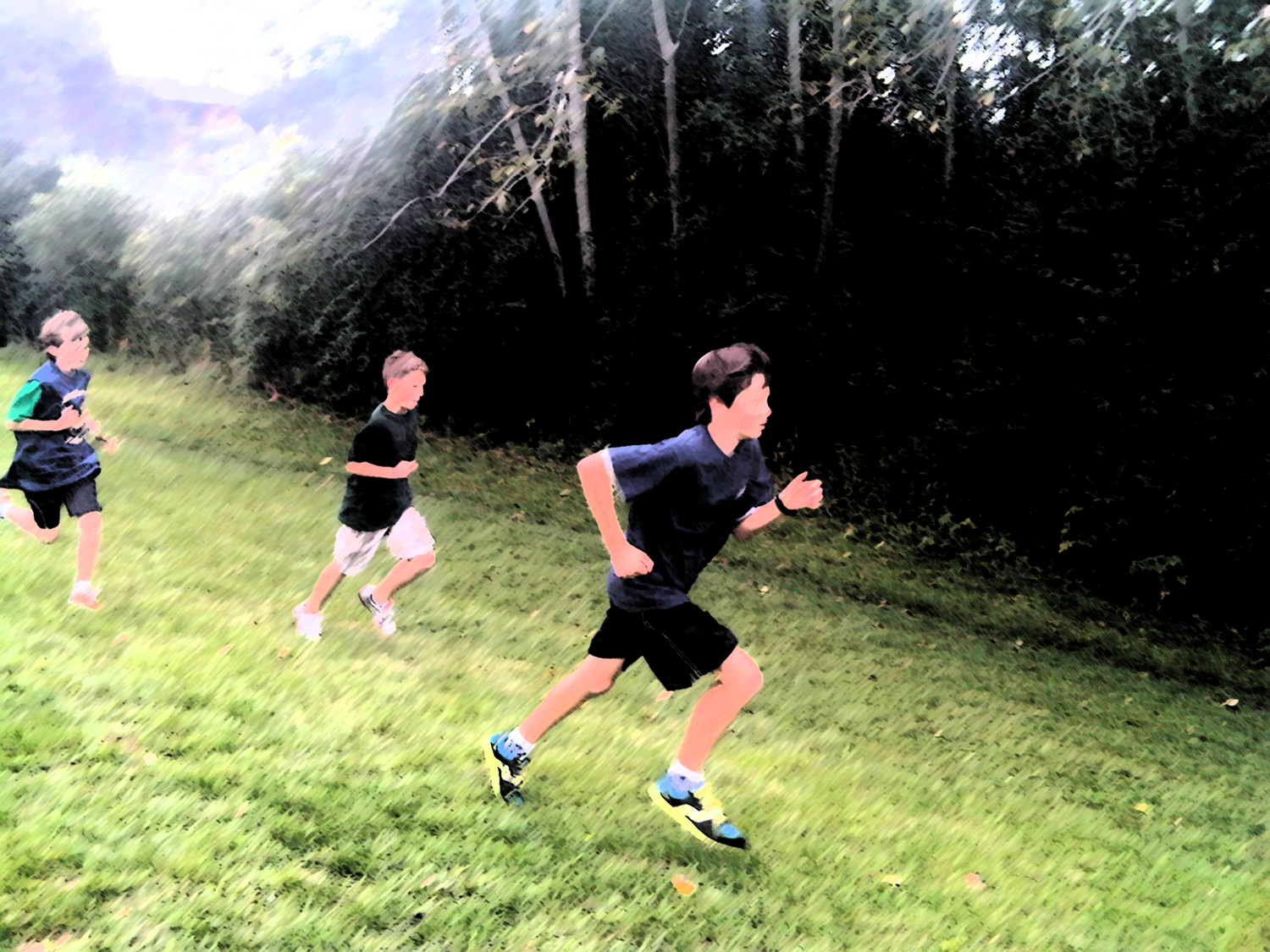 Last Friday, my 8-year old son participated in a city-wide cross-country track race. I went to encourage him and to help out his teachers; but what started like a little parenting side-trip turned into a profound leadership observation with implications for businesses and communities.
I noticed that all the parents and classmates gather at the start line of the 1km race for pictures and encouragement and then they race to the finish line to applaud their child’s achievement. Of course, that’s natural and it’s great parenting.
However, after the first group of front-runners crosses the finish line, the applause and encouragement is not as loud. People drift away with their kids as the middle group and the ‘stragglers’ finish up. So, after my son’s race, I deliberately found a stretch in the middle of the course where there was no one shouting encouragement. I stayed past those nipping at the heels of the pace bunny and I waited for the group in the middle and, especially, for the kids who were at the end of their group.
I shouted really simple things like “You’re half-way there”, “You look awesome”, “Nice stride” and “You can do it.” What I saw amazed me. Just the presence of someone there made them perk up, start running again, lengthen their gait. I saw kids literally lift off the ground (once their face stopped saying “Who is this lady and why is she shouting at me?”).
I started thinking about how everyone cheers for the winners; but what about the kids who had the courage to sign up for something outside their comfort zone? Who’s cheering for them and the courage and perseverance they’ve displayed? There’s a huge crowd around the “winner”. The “winners” will be encouraged to keep going. The “winners” will be invited to special training to improve even more.
Where’s the crowd around the courageous? the brave? the tenacious? The chubby kid who’s trying? The kid with Downs Syndrome or with less visible challenges?
I just did a mini-triathlon in September and, hardly a natural athlete, I know what it’s like to be at the very back of the group. I know what it’s like to have to walk many parts of a race. I also know what it took for me to sign up, to train, to show up. Of course, they tell the kids “run your own race” but that’s hard to do when you see a big group of kids pulling away in the distance. It’s still discouraging. I know what it’s like to pull out of a race in junior high because you’re just so far behind you don’t think you’ll finish and you’re embarrassed.
I admit, I got a little pissed off that parents were leaving as soon as their kids’ race was over. Why was I alone cheering on these kids in the lonely stretch? Yes, their teachers were at the finish line. Yes, I had the luxury of time on my side that day but aren’t they all our kids? Don’t they all deserve to have someone there to cheer them on – whether they are first or last? Especially if they are last? Otherwise, they just won’t come next time.
In our community, where else can we encourage the kids who are struggling?
In our workplace, are we cheering on the superstars and drifting away when the “average” workers – the solid, consistent people – come through because a “win” is exciting but a finish is expected?
Are we encouraging those who are struggling, especially when there are specific challenges they are trying to overcome? An ‘average’ worker who is keeping it together despite being torn-apart because a parent is dying (I have been there too). An ‘average’ worker who is still delivering despite a marriage falling apart. Do we recognize the extraordinary efforts it sometimes takes to be “average”?
I’m just suggesting that we try to be there for everyone who’s in the race – literal or figurative – because when we encourage others – in that lonely stretch where people are struggling – people will literally rise off the ground, lengthen their gait and hear the crowd cheering for them. They will return to try again. They will start to see themselves differently. They may never be first but maybe they’ll be faster, stronger, happier and more confident.


 Last week, prodigious reader, blogger and my good friend, Susan Gibson, was very kind to invite me to submit a guest post for
  Accolade Communications