This is not the post I had planned to write. Originally, I was wondering whether we let ourselves off the hook when we say “it’s the journey, not the destination” because, frankly, I’m pretty sure the Olympians want to perform at their peak at the destination too. I was thinking: It’s the journey AND the destination.
Damian Warner set six personal bests to finish fifth in the decathlon which is impressive. More impressive is that he did not do as well as he expected in hurdles but explained that he had two options: let it affect him or move past disappointment and focus on the next event. Great advice for all of us on how to handle ourselves when things don’t go our way. Here’s the full video of the interview with this young man, a promising athlete with an amazing attitude!
Wrestler Carol Huynh pointed out that all the athletes competing at world class events have the strength and the speed but what sets them apart is what’s in their mind. I may borrow her mantra of Courage & Confidence which involves having the courage to take risks ! Check out her interview for a contagious smile and a winning perspective.
To these, I’ll add this interview with silver medalist Adam van Koeverden that I saw the other day. He points out the importance of surrounding yourself with excellence to improve yourself using the analogy of a world-class boxer who only improves with an equally good sparring partner.
I know there has been no shortage of Olympic blogs and leadership lessons from the podium. Of course all Olympians are models of self-sacrifice, discipline and focus but tonight I thought I’d celebrate a few that you may not have heard about and who showed how to act with grace and authenticity when you get to the destination.
It took me five months to go through business ethics, marketing, strategy and economics literature.
Now, for the low, low price of 15 minutes all this information can be yours!
The quality of the video is not perfect, but I promise you the content is entirely based on an extensive bibliography . I hope you find it helpful. As always, I welcome your feedback.
Economics, strategy and ethics literature all suggest that an organization’s culture, structure and processes must foster trustworthy behaviours internally in order to maximize trust in inter-organizational relationships (Casson, 1995; Drake & Schlachter, 2008; Dyer & Chu, 2003; Sydow, 1998; Zaheer, McEvily & Perrone,1998).
As we covered in Week 5: Ethics at the Heart of Trust, organizations have a moral obligation to consider the ends and means of their processes. So an ethical, trustworthy organization has to meet the needs of its internal and external stakeholders.
Organizational trust and inter-organizational trust are inseparable. Otherwise, the trust your boundary-spanners develop with partner organizations and stakeholders may be a thin veneer of trustworthiness while the ‘guts’ of your organization cannot deliver in terms of capability or on the promise of benevolence.
In the Journal of Business Ethics, Matthew J. Drake and John Teepen Schlachter wrote:
“Organizations must first ensure that trust permeates their own corporate culture before shifting their focus outward to their relationships with other firms” (Drake & Schlachter, 2008, p.852).
Culture Builds Organizational Trust
Indisputably, organizational culture has a key role in fostering inter-organizational trust. The organization and its leaders focus attention on what is important. They set the norms and expectations for collaboration and determine whether the organization prizes trustworthiness internally and externally (Pollitt, 2002). Leaders create written and unwritten rules and processes like incentives and performance measurement that focus and influence behaviour.
In a “do whatever it takes to make your target” environment, a short-term focus contributes to an exclusive focus on results rather than on building relationships. It may lead to co-workers undercutting one another. And we all know what type of behaviour was encouraged by an exclusive focus on profits on Wall Street and the dramatic fall-out.
On a less grand scale, imagine a workplace where co-workers don’t trust each other enough to share information, where people delay or undercut one another. Do their external partners, clients or society get the best product or service in this case?
Conversely, organizations can generate results by requiring trustworthy behaviours. A long-term strategy, inclusion of team goals, valuing client feedback and growing relationships all encourage growing the pie rather than hoarding your share. In their important article “Trustworthiness as a Source of Competitive Advantage” Jay Barney and Mark Hansen wrote:
“If the culture in an organization is right, individuals can be self-interested and still behave in a strong-form trustworthy way” (1994, p.181).
In addition to applauding and incenting trustworthy behaviour, organizations must also actively denounce and punish those who act opportunistically to demonstrate that it will not be tolerated, to protect their reputation, and to avoid damaging inter-organizational relations (Dovey, 2009; Girmscheid & Brockmann, 2010; Hexmoor et al., 2006). In fact, the development of that reputation may rest on internal promotion of a strong culture of trustworthiness (Hexmoor et al., 2006).
photo source: MS Office Clip Art
Do your Organizational Practices Build Trust?
An organizational culture that fosters internal and external trust building is buttressed by all the organizational practices and routines within which trust can develop and persist. Put another way, the rules and processes create a stable environment in which trust can flourish.
Do your organization’s processes build trust?
Does your organization…
Yes
No
1… live its values?
2… encourage open communication and collaboration between departments?
3… empower you to disclose all the information your partners need to make the most of your alliance?
4… reward trustworthy behaviour internally and externally?
5… have simple contracts?
6… invest in Transaction Specific Investments (location, marketing, signage, training, etc.) with its alliance partners?
7… encourage joint planning (internally and externally)?
8… encourage joint problem-solving (internally and externally)?
9… ensure that communications technology works, is easy to use, and meets the needs of all the partners?
10…allocate sufficient financial, human and technological resources to key partnerships?
11…empower its representatives to enter into alliances and to fulfill their roles to the best of their abilities?
12…punish trust violations?
13…put the needs of its partner first?
If you answered ‘No’ to any of these questions, then you have a good idea where to start improving culture or processes in your organization.
The resourcing question is particularly important. In their longitudinal study (of which there are very few) published in the Journal of Marketing, Eric Fang and his colleagues wrote that boundary-spanners must have the trust of their organization and the authority to deliver on their obligations. Otherwise, “Deficient agency trust in the firm’s own team members inhibits critical additional resource investments in the collaboration and results in sub-optimal performance” (2009, p.93).
Quite simply, if an organization does not trust its people enough to invest properly in a joint-venture or alliance, then capability trust is reduced because partners can’t meet their joint objectives and the outcomes are not maximized for either partner.
Of course, my little quiz is not exhaustive and it would definitely not pass the survey section in my Research Methods course! Then again, if I could summarize everything you need to know about trust in a 13 point list then what have I been going on about for 11 weeks? So I’d like to know, what would you add? Drop? Change? What do you think your organization does best to build trust internally and with its external partners?
If you are visiting this blog for the first time and want to know more about Twelve Weeks to Trust or if you have missed any inter-organizational trust posts, click here for the full list. If you are interested in any of the articles referenced, they are listed in My Trust Bibiliography.
Coming up next? Trust Building Best Practices for Leaders. Warning: it’s likely to be a multi-parter.
It’s been a bit of a slow summer for blogging. Lots of inspiration but little time to get it all down. So I have amassed a raft of pictures, a stack of books bulging with sticky notes and draft posts with ideas and links but nothing presentable.
I suppose I could throw anything into a post in the interest of keeping the traffic numbers up- all the blogging advice tells you that frequency is key – but that’s not really the reason that I blog and I don’t think it’s the reason that you visit.
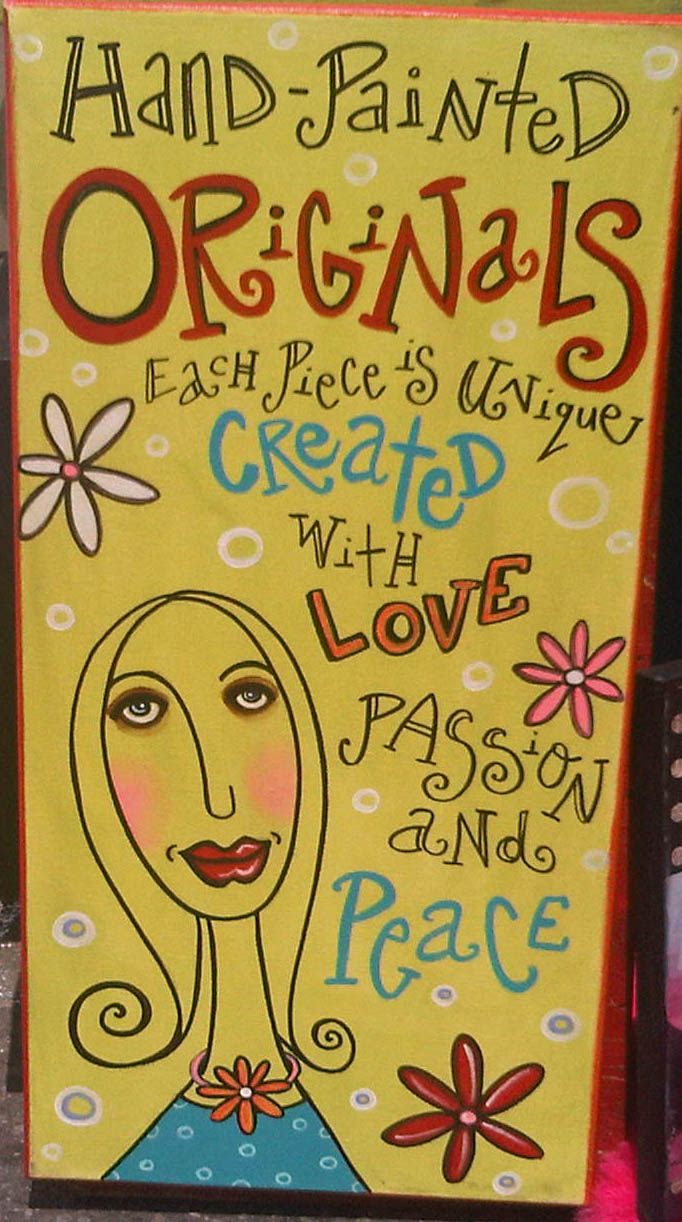
When I saw this painting at a booth at our local Art on the Street event it reminded me that while we may not all be painters, we are all artists in our own way – in the work we do, in how we raise our kids, in our relationships, in the pictures we take and the food we prepare. It prompted me to think about the energy I bring to my professional, community and personal projects.
I want each of my blog posts to be originals, created with love and passion and peace. I deserve that and so do you.
So, soon, when I get the last of the water out of my ears, when I’ve finished visiting museums with my kids and driving them to camps and when some of my client work has been completed, I will finish the Twelve Weeks to Trust series and return to a more regular blogging schedule. (I don’t think I ever promised they would be twelve consecutive weeks, did I?)
Until then, I hope you’ve had a fantastic summer with time for street festivals, beaches, family and some peace. As for me, I’m headed to my daughter’s dance camp recital… like the magician in Frosty the Snowman “busy, busy, busy”.



 Accolade Communications