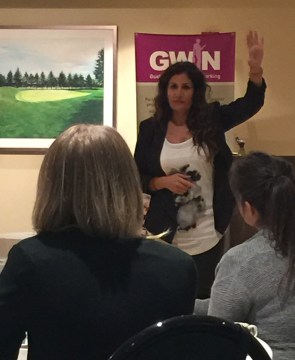
At a Giving Tuesday panel a few weeks ago, I was asked to talk about trends in trust and how to build it… in three minutes. Since the timeline was a little tight, I thought I’d round out the conversation here 🙂
First: Trust in institutions is declining globally and in Canada
It’s well established that trust in media, government, business and NGOs is hitting record lows globally. In a “post-truth” and “fake news” era, how could it be otherwise? In Canada, the 2017 Edelman Trust Barometer shows we’ve shifted from neutral to distrusting of our major institutions for the first time in the survey’s 17 year history.
Second: Declining trust is an important individual, community and business issue
So what if we’re distrustful? Think of any organization that has to work harder to reach and to convince a particular audience. There’s a cost to that. I’m not just talking about persuading someone to buy a certain product. I’m talking about needing people to respond to important public policy, to donate to your cause or to to convey important health information.
Think of a stock that crashes because of a scandal or an organization’s inability to attract good candidates because of poor ethics. There’s a cost to that.
Think of a community that is less resilient because people can’t or won’t help each other through a crisis. There are major human and financial costs implications.
People tend to think that measuring, building and nurturing trust is “soft.” In fact, it’s a tangible bottom line issue. Trusted public companies tend to have better performance. Higher levels of trust reduce transaction costs and improve the likelihood of productive interactions.
How much money can an organization save when it negotiates a contract on a handshake? Millions. Ask Warren Buffett.
Even if you’re not negotiating multi-million dollar deals, the erosion of trust can have an impact on your organization.
Third: There are easy ways to build trust in your organization
Build trust by showing ability, integrity and benevolence
While there are more than 90 academic definitions of trust ranging from trust as a feeling, a behaviour or an operating framework and many shifting dimensions from shallow transactional trust to deep identification trust, a good place to start is understanding that Trust= Ability+Integrity+Benevolence
People don’t have time to verify all your credentials, so how do you show them you know what you’re doing?
- What does your physical or digital location say about you?
What does your environment say about you? Is it fun, welcoming, easy to navigate? While your physical or digital presence needs to align with your brand, it can also be used to build trust. Is your restaurant clean? Is your office organized? Are your tools in good condition? Is your online presence user-friendly? Do your online platforms work? Are your communications clear and compelling? What does your “real estate” tell me about your ability to do the job? These are all clues about your ability to deliver on your promise.
- Do you have third party designations or awards? Are they showcased?
People use third party validation as a shortcut to trust. So include professional designations on your business cards, put up certificates and awards in your space – modestly – and list accomplishments on your website. There’s a reason Best Employers, JD Power, Green 30 and Most Respected Company competitions are so popular. They serve as a proxy. (Did you know the Oscars and the Super Bowl are both PR strategies to sell more movie tickets and extend the football season, respectively?)
Few things are more persuasive than a great testimonial – especially when the person giving it has nothing to gain from an endorsement- so forget paid influencers. But who should speak on behalf of your organization? Of course, that depends. In a crisis, you have to go with top leadership because they are accountable; but in a range of other communications, take the time to think about who is more likely to be trusted.
Tough employee conversation? Face-to-face with the immediate manager is the best option. Online product reviews? Honest, objective assessments from total strangers take the day. Direct mail campaign for charitable giving? “A person like me” who has been helped by your cause.
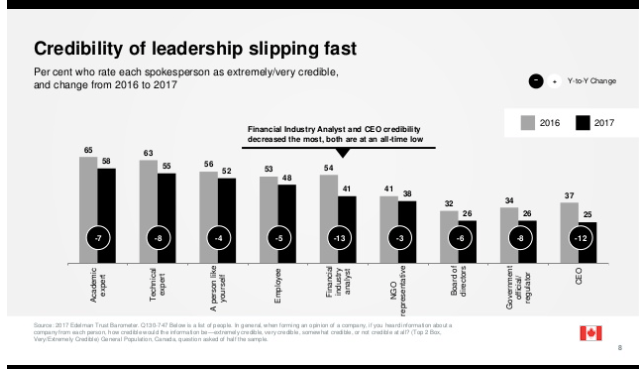
If you look at the Edelman Trust Barometer slide, you can see that trust across the range of spokespeople dropped last year. Still, academic and technical experts continue to lead the pack in credibility, followed by “A person like yourself.” There’s a reason people read Consumer Reports and The Lemonade Guide. We need an expert we can trust as a shortcut to doing all the due diligence ourselves.
This does not mean your CEO is not competent or credible. It means that because they have a vested interest in the outcome – their job, stock prices, etc – they are not always the best spokesperson. Organizationally, people trust regular employees. That’s why Ford uses them in their commercials.
Show integrity

When world leaders can change their tune on a daily basis and people care more about “personal brand” than authenticity, it feels like integrity is in short supply. But let’s not despair, there are many ways an organization can show integrity.
- Do you act with integrity?
Leaders need to act with integrity. Period. Simple. Remember when “my word is my bond”? Let’s go back to that.
Be the moral compass.
For the organization to show integrity you can do anything from mandatory audits (but you can do better than that) to third party validations to transparent communications. At Rhino Foods, they use Open Book management to ensure employees understand the state of the company’s finances, the impact of what’s happening in the market or in the organization and their role. And, of course, the employees share in the profits. They also help problem-solve when there are issues. But don’t take my word for it…
Open Book Management
In the absence of transparency and openness, employees and “the market” feed on rumours and speculation. That’s just bad for business.
- Do you set common goals and share decision making?
In my grad school research on inter-organizational trust, joint goal setting and joint decision-making were important elements of building trust, especially in new ventures. Why? They force transparency, they equalize power and they align vision, priorities and resources. Without them, a staggering number of joint ventures fail.
The value of joint goal-setting and joint decision-making applies to partnerships of all sizes. For example, in large-scale humanitarian mobilizations, the parties don’t have time to get to know each other personally or to assess one another’s capability or integrity. They assume they are capable based on their brand, their equipment, their experience, their credentials and other signals. Joint goal-setting and decision-making is a mechanism that signals equality, transparency and shared outcomes.
- How do you respond in a crisis?
Organizations show integrity and build trust in a crisis by taking responsibility, providing information, showing empathy and outlining a clear course of action to address the issue. Of course, they have to mean it.
JFK said “The time to fix the roof is when the sun is shining.” That’s true for building trust too. Make sure people feel comfortable flagging issues for you early.
- Do you punish the bad apples?
 Showing integrity is not just channeling trustworthy behaviours. It also has to establish norms and values and challenge behaviours that are not aligned. Are your corporate values relevant to people? If you quizzed your employees, would they know what the corporate values are or are they a list on a poster somewhere? Are values reflected in compensation and promotions? Do you value how results are achieved as much as the results themselves? What happens when people don’t exemplify your norms and values?
Do you use your code of ethics for decision-making and value creation or is a document to be dusted off and signed once a year? Are your corporate policies aligned with consequences? Are bad behaviours overlooked for star performers? Are some issues swept under the rug? Do employees see leaders taking responsibility?
- Do you invest in your partners and in your people?
Business strategy research shows that Transaction Specific Investments and a long-term orientation are very important in building trust. These investments can be information sharing, investing in infrastructure or a joint platform. They can be as simple as relationship building. With your employees, it can be investing in their education and training. You can’t be sure your employees will stay and that you will benefit from their new knowledge and skills, but you are willing to signal that their development is important to the organization.
A psychological approach to trust will tell you that trusting relationships are built slowly over time; but between organizations, research consistently finds that anticipated future longevity of a relationship – or the long-term vision of what lies ahead – is positively correlated to trust (Currall & Judge, 1995; Doney & Cannon, 1997; Ganesan, 1994; Sako & Helper,1998).
Competence and integrity can create institutional or relational trust. To move from trust based on a calculation to deeper trust, you must show benevolence.
Show benevolence
Research shows that waiters who suggest a lower-priced menu item when you ask for advice receive higher tips. Why? Because they appear to show benevolence. By removing the waiter’s perceived self-interest, he appears to be putting your needs before his and gains your trust, you reciprocate with a bigger tip. I’m not suggesting you fake this… I am just pointing out that it works.
Benevolence is the magic ingredient to trust. You could apply all the strategies we’ve discussed here but without benevolence, you’re just building confidence or reliability. Benevolence is going the extra mile for your partner. Guess what? It’s good for you too. It builds employee engagement, customer loyalty and can create value.
Are you flexible with your employees? How do you respond to their needs?
Do you partner in your community or have programs that positively impact your community? If you are partnering with an NFP, do they have equal power in the relationship? Are you helping to resolve social issues or are you exacerbating them?
Do you put customers’ needs ahead of profits? Is your organization sustainable? Basically, are you part of the problem or part of the solution… even when you don’t have to be?
Fortunately, we can easily think of many organizations that are exemplary in this regard. Consistently, they top the charts of best employers and most admired companies. You can be among them too!
Looking for more information on types of trust?
In the end, it’s good that the Giving Tuesday panel only had three minutes to talk about trust. Otherwise we could have been there until lunch time – possibly dinner! That’s why I’m working on a trust-building workshop that will be ready in the Spring. Interested? I’d love to chat or read your comments.
Thank you for visiting Accolade!

 identities are formed through our families, society and our experiences through the Star Wars characters. While that’s the crux of the exhibit, I was struck with the detail in the movie models, the costume sketches and the signage that explained the painstaking character development and costume design. I hadn’t given any thought to the years of planning that go into movies although it makes abundant sense. You can’t exactly show up on a multi-million dollar movie set without having thought of every detail in advance. And when your movie is a sequel – as many complex organizational projects like replacing legacy systems are – you need the full back-story, the full picture of how your decision will play out in the future and its impacts across the organization today.
 week and saw how they are promoting values and behaviours. The night kicked off with awards related to how students approach their studies like curiosity and teamwork. There were awards for students who show awareness and interest in the global context and certificates for students who promote their faith, language and culture. (It’s a French catholic school in a predominantly English community).



 Accolade Communications