
Onwards: How Starbucks Fought for Its Life without Losing Its Soul

I fell for it! The quote from Warren Bennis on the back cover of Onwards: How Starbucks Fought for Its Life without Losing Its Soul. It read:

“Howard Schultz has written, with aching honesty and passion, the single most important book on leadership and change for our time and for every generation of leaders. This book is not just recommended reading, it’s required.”

Wow! That is quite a claim. Nonetheless, I decided to trust this distinguished business professor who focuses on leading change. Unfortunately, the book did not quite live up to its hyperbolic billing. Unless you really LOVE coffee…. how could it?  One over-riding observation of the book is its propagation of the “Great Man” approach to leadership.  The entrepreneur builds his empire, leaves the top administrative position for the Board, but when things go off the rails he orchestrates his triumphant return, leads the charge, inspires his legions of staff and customers… you get the picture. Of course, things are not smooth in the 2007-2010 period in domestic and world markets so Schultz does document some fantastic ups and downs and provides an interesting, though very detailed, view of his supply chain and operations from beans to baristas.

As a leadership book, Schultz and co-author Joanne Gordon, do consistently highlight the importance of:

  • Focusing on core values: In the case of Starbucks, product quality, social relationships and sustainability.
  • Articulating and communicating a clear vision: Starbucks formulated its 7-point Transformation Agenda and consistently communicated it to partners, shareholders, analysts, media. Particularly in times of organizational uncertainty, it is very helpful for people to feel that there is a clear and logical direction.
  • Allowing room for emergent change within a planned change agenda: Beyond the Transformation Agenda, Starbucks encouraged LEAN principles. Within each store, managers could tweak their processes to improve productivity and, as it applied to them, other locations could adopt the new methods.
  • Ensuring leadership visibility: Schultz’ description of numerous site visits to Starbucks locations as well as to a coffee co-op in Rwanda and the roasting plant, show a commitment to deep listening as well as the classic ‘Management by Walking Around’. He also explains his decision to hold a leadership summit in Katrina-ravaged New Orleans despite the significant cost in a tough business climate as an opportunity to reconnect and re-energize front-line workers.
  • Boosting staff engagement: Leadership visibility and ongoing communication helped build trust in organizational leadership and fostered staff engagement. By renewing its public commitment to sustainability and to the RED initiative to tackle HIV/AIDS, Starbucks aligned the values held by staff with organizational initiatives and built deeper meaning into seemingly mundane, daily tasks. Despite pressure from analysts and shareholders, Shultz also maintained company health-care benefits, demonstrating benevolence and a commitment to staff’s well-being beyond the confines of the operations.  Finally, on a very practical level, Starbucks committed to providing the tools and training needed to improve the store’s daily operations, i.e., training, better IT systems, improved supply chain management.

So there are many great leadership lessons and principles that can be extracted from Onwards (is that a coffee pun?). In particular, I find it refreshing that Schultz admits to certain errors which are usually glossed over in “hero” type narratives. However, there is a LOT of coffee talk. I don’t need to know what kind of coffee Mr. Schultz was drinking when he wrote his memos. I don’t need to know why I’ve been so wrong drinking drip coffee all these years and just how looooooooooooong it took to perfect Pike Place Roast or the VIA instant coffee. But if you like that sort of thing, put a pot on and settle in. There’s quite a bit of detail on roasting, blending, brewing, serving, savouring, etc. It’s interesting but not exactly focused on leadership – except that it highlights the leader’s absolute passion for his product and its delivery.

Another observation I would make is that there is quite a bit of name dropping. It does not mean a thing to me that Shultz is friends with Michael Dell, COSTCO CEO Jim Sinegal, The Limited’s Founder Les Wexner or Bono for that matter. Most importantly, there are numerous references to teams working non-stop, through the night, etc… For example,  “Week-end meetings at my house were quite common” (p.59).

It sounds like Starbuck’s staff were working pretty hard so, Mr. Schultz, PLEASE stop calling them during Thanksgiving dinner, on Christmas Eve, from the plane, to your home on week-ends.

It’s ok to have staff engagement but organizations don’t have a right to invade every moment of people’s private time. Would it really make a difference to delay the development and launch of a loyalty program by a few days?
Overall, an interesting book about change in a global organization during an unprecedented economic period but “the single most important book on leadership and change for our time and for every generation” it is not.

Do you Wordle? Generate a Word Cloud in minutes

You’ve seen the cool word clouds on posters, web-sites, greeting cards, … but do you know how to make one? Check out Wordle.net for a quick and easy word cloud.

Paste in a bunch of text or a url. Within seconds Voilà! Your word cloud. The program automatically excludes common words like “the”, “or “, “and” etc.

Remove words by right clicking and choosing “remove posted”.

Choose the number of words in your cloud by selecting “layout” and “maximum words…” You can also choose the orientation of your words and the shape of your cloud here.

Choose your font, colour and layout by clicking on the menus at the top.

The advanced feature also allows you to weight terms that are more important for you.

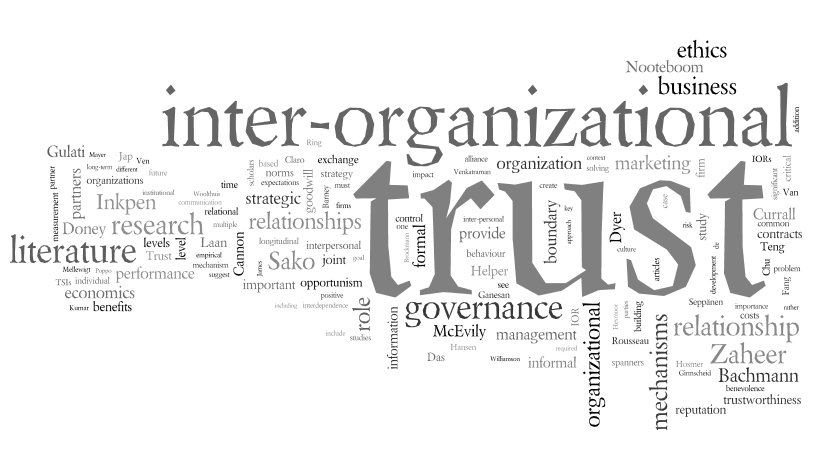
Here’s the wordcloud I generated by including this url a few weeks ago. What is interesting is that while I tag posts under “leadership” and “communication” I apparently don’t use those words in the text. While not designed for this purpose, Wordle.net provided instant feedback on the focus of my posts, indicating that I may be off-topic. Conversely, you could run a speech through Wordle.net to confirm that your emphasis is focused and consistent.

I wanted to test how much text Wordle.net can handle so I cut and pasted the text from my M.A. Major Research Paper. Thankfully, I was on target with that one. Here’s what it yielded (whew!). Again, it’s interesting to see at a glance which scholars I quoted most often and which themes were most prevalent.

So whether it’s a birthday card or a blog post, have a little fun and give it a try.

Put down the “smart-phone” and ask a great question

At a business lunch, I noticed that almost everyone left their phones on the table in front of them. Are they waiting for someone more interesting to call? In a pub on St. Patrick’s Day, at least half the people were holding phones, telling others… what? That they are having such a great time? If that’s true, why don’t they put the phone down and say that to the people in front of them? I have no objection to texting a friend so they can meet up with you but when you are intent on documenting all your moments for people who are not there, aren’t you missing out on the experience of actually being present, with the people who are there? Or if you are constantly checking your phone to read other people’s Facebook posts, texts, Tweets or e-mails, are you telling the people you are sitting with that you’d rather be elsewhere? Then last week I saw a woman take her iPhone to communion. Seriously…. someone more important than God is going to call, text, Tweet, Facebook or BBM you in the 30 seconds it takes you to walk up there?

Shake it off people! I know it’s our reptilian brain that is easily distracted. It’s the ego that’s fed whenever others respond to your picture, post or Pinterest…. but we are not Pavlove’s Dog. We do not have to react to every flashing light, every beep, every tweet and text.

As my high school French teacher used to say when the bell rang: “Dogs respond to bells. People respond to other people.” So the next time you’re sitting at a lunch, hanging out in a pub or having a meal with friends or family, embrace the opportunity to get to know something new about the people around you, to deepen your relationships and to challenge your assumptions. You can’t do that in a tweet or Facebook post. In his book, You Should Have Asked, Stewart Knight recounts how asking “Which Canadian do you most admire?” at a family reunion led to a rich conversation about his father’s immigrant roots and political hero and his mother’s literary tastes – two aspects of his parent’s lives he had completely ignored until that day. His book offers an easy approach to creating powerful conversations by asking good questions. Knight writes:

“With powerful conversations, instead of learning where a person lives, you will discover one of their favourite childhood memories. With powerful conversations, instead of knowing what a person does for a living, you will find out what that person does as a passion. You will discover the intricate and fascinating details of what makes that person who they are” (p.38).

Not only will you benefit from a more interesting discussion and a deeper relationship but, according Robert Cialdini author of Influence: Science and Practice, when you identify something you have in common with another person, that similarity leads to liking, reciprocity, stronger networks and a greater ability to accomplish your personal or professional objectives. Within an organization, research from Ken Blanchard found that connectedness to the leader – the extent to which leaders make an effort to build rapport and personal and professional relationships – leads to greater discretionary effort and higher intent to remain with your organization. Connectedness to colleagues – the extent to which colleagues make an effort to build rapport and personal and professional relationships – is also positively correlated with discretionary effort and organizational citizenship behaviours.  So people who feel connected to their co-workers are more apt to go the extra mile at work. Bottom line: there are compelling personal and professional reasons to be fascinated by others, to honour their uniqueness and to ditch the small talk:

  1. Ask open ended questions like:
    •    What do you like most about what you do?
    •    What led you to this type of work/hobby/pursuit?
    •    What would you change about your industry/community/legislation/etc?
    •    What did you want to be when you were a child?
    To borrow a few from Knight (and he has a ton of great ones):
    •    Out of all the jobs in the country, which one do you think would have the most devastating impact on society if those people didn’t show up for work? And what would be the worst day of the year for them to not show up? Why?
    •    Ask people why they live, work or travel where they do.
  2. Listen and build your next question on what you have just heard.
  3. Stop worrying that asking questions makes you look like you don’t know anything – you certainly don’t know everything so get over it.
  4. Ask how things work, why they are that way, what makes a process so difficult. 
  5. Embrace the opportunity to learn!

Great questions are the ultimate mobile app so use them wherever you go! After reading Knight’s book, my husband started asking our kids a ‘Question of the Night’ at the dinner table and the conversations are fantastic. It gives the kids a chance to practice listening skills and also to respond to a serious question where there’s no right answer. Our favourites include:

  • If you could go anywhere on a family vacation where would we go and why?
  • If you had a superpower, what would it be?
  • When you are a parent, which rules will you enforce in your home?
  • If you could only eat one food for the rest of your life, what would it be?
  • Who is your favourite character in a book?
photo credit: http://www.MelissaAndDoug.com

To boost our dinner table topic creativity I recently purchased The Box Girls Family Diner Box of Questions. Try these at home, with friends or at the office or leave the cards out on tables during a party and watch the level of conversation rise! Another great resource (that also comes with a mobile App) is the Story Starter Pack. My favourite question here is : “If you could dig a tunnel from your house to anywhere in the neighbourhood/country/world, where would it go?”

You deserve the gift of more fun, meaningful and memorable conversations and the deeper relationships that result from them. Your co-workers, friends and family deserve to feel worthy of your attention. Try it! You can tell everyone about it on social media…. later. And, please tell me…. what’s your favourite “deep question” ? And what happened the last time you asked one?

Guest Post: Resilience – The Power of Bouncing Back

Thursday Guest Post

My friend and classmate Glo Higdon provided great advice on resilience in her trueblisscoach blog earlier this week. She is an accomplished entrepreneur, a coach, scholar and lifelong learner who never fails to bring new insights and practical research-based suggestions to timeless challenges. With her permission, I have reposted it below in its entirety.

I hope you enjoy this post and encourage you to visit Glo’s blog.


March 26, 2012 By trueblisscoach

Recently I’ve been reflecting on the personal power that comes with being able to bounce back from adversity and set-backs, also known as resiliency. According to Wikipedia, resilience is known as a process rather than as a trait. Resilience can be developed and in fact a group of researchers (Grant, Curtayne, and Burton, 2009) have identified that coaching itself, as an intervention, creates resilience in individuals. This is due to the process of learning to overcome obstacles and perceived barriers to our growth and replacing them with solutions. Resilience is something coaching clients become masters at.

Last week I watched an interview on Oprah with Ingrid Betancourt, author of Even Silence Has an End: My Six Years of Captivity in the Columbian Jungle, and I was inspired not only by her ability to cope throughout her ordeal, but by her ability to bounce back once captured. There are many examples where the human spirit has masterfully captured this process. Another shining example of this level of resiliency is in Alice Herz Sommer, a 108 year old woman who is a survivor of a Nazi concentration camp whose words to live by are “I know about the bad but I focus on the good.”  If you haven’t seen it, click on this link to watch Alice’s very inspiring 12 minute video interview with Anthony Robbins. Talk about inspiring! While these two women and their life circumstances aren’t exactly everyday stories (fortunately), there is a great deal to learn from them which we can use in our everyday lives.

Through the reading I did for my research paper, I was so fascinated with the individual and the collective elements of psychological capital or PsyCap. Researchers Luthans, Youssef, and Avolio developed PsyCap in 2007, a combination of self-efficacy, optimism, hope, and resilience. Although it is easy to see how each of these elements might influence the other, this post is focused on developing resilience so that we are able to bounce back quicker. The ability to bounce back from set-backs, put your head down and keep going even when faced with bad news or rejection, and focusing our mindset on what really matters is at the core of this post.

Often times when we set out to achieve a particular goal but are faced with multiple roadblocks, or when we receive feedback from others that isn’t what we were hoping for, or we are put in challenging situations that test our ability to survive let alone thrive, we may find it difficult to bounce back. Here are a few things that I do that might help you as well. I’ve tried to add things that are in addition to the other elements of PsyCap. Try all of them or any combination based on the circumstances involved and see what might work for you.  Finally, share what works for you and enables the process of bouncing back.

Growth – View every experience as a “learning” opportunity. Use the past to learn from, not to dwell on. Ask yourself what might I do differently next time to achieve an even better outcome?

Diversify – Advice from my Dad, don’t put all of your eggs into one basket. Focus on multiple opportunities so that if Plan A doesn’t pan out, you have a fall back with Plan B or C…

Chunk down – Take an experience and pull it apart so you can look at it from multiple angles and break it down into smaller steps. Smaller steps may be exactly what you need to dive back in.

Change – Try to be open and flexible to change. Look for one small way in which you might become more open minded. The ability to bounce back is only enhanced by an openness to experience.

Gratitude – Find the good in the situation and give thanks for it. Sometimes this requires making comparisons. I didn’t get this but I did get this, this, and this and they will help me to do this, this, and this so that I can experience even more of this, this, and this.

Mindfulness – Whether you meditate, pray or prefer to sit in a quiet space to observe and reflect, mindfulness is a powerful way to ensure that we are deeply connected and living in the present. Action happens when we are living in the present.

Scale – When faced with difficult situations, it’s often helpful to scale their level of importance using a timeline. Keep things in perspective. How important will this be in a month from now, a year from now and 5 years from now?

Kindness  – It’s so easy to get caught up in the details of the moment, that sometimes we forget to celebrate. Be kind to yourself. Think of a time when you experienced success. Indulge in the moment. Celebrate that feeling knowing that it can happen again and again and again.

Wishing you much success always,

Glo

(C) 2012 – True Bliss Coach Gloria Higdon